The guide to the best Shāfiʿī book editions - and which one you actually need
M4KTABA TEAM
contact
السلام عليكم ورحمة الله وبركاته
There is a question that every serious student of Shāfiʿī fiqh eventually asks — sometimes out loud, sometimes quietly while staring at a shelf of intimidating multi-volume sets: Which edition? Which commentary? Where do I even begin?
The market for classical Islamic legal texts has never been richer, and that abundance is precisely the problem. When a single work comes in three competing editions, each with different verification teams, marginalia, and binding qualities, the student is left not with clarity but with paralysis.
This guide cuts through that. It is drawn from the recommendation of Labib Najib who has lived inside these books — not just read them. Whether you are building a personal library, pursuing formal Shāfiʿī study, or simply trying to understand what you are buying, this is the reference you keep open.
The Three Pillars: The Great Commentaries on al-Minhāj
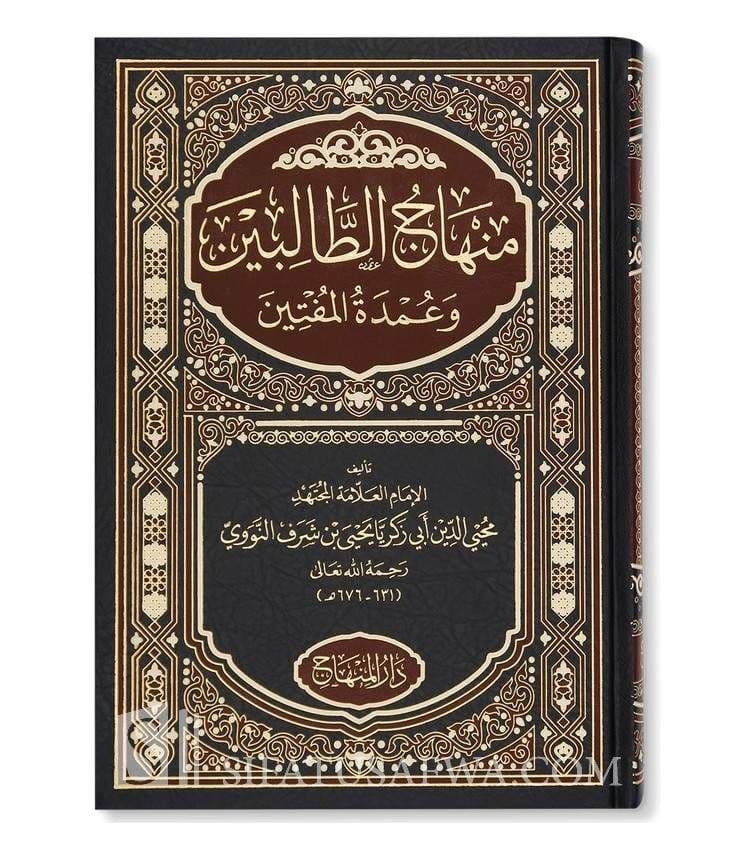
Every serious Shāfiʿī library orbits around Imām al-Nawawī's Minhāj al-Ṭālibīn. But the Minhāj is a skeleton — it is the commentaries that give it flesh and jurisprudential life. Three commentaries stand above all others, and for each, edition matters enormously.
1. Mughnī al-Muḥtāj — Best Edition: Shaykh Muḥammad Sālim Baḥīrī's Print
Mughnī al-Muḥtāj by al-Khaṭīb al-Shirbīnī is the most widely taught of the three great commentaries. It is precise, structured, and genuinely accessible to an intermediate student — which explains why it has been the backbone of traditional curricula for centuries.
The recommended edition is verified and prepared under the oversight of Faḍīlat al-Shaykh Muḥammad Sālim Baḥīrī. This is not a decorative name-drop. The verification work here reflects serious scholarly engagement with the text — cross-referencing manuscripts, resolving corruptions, and presenting the work in a form the student can trust. For a commentary that students will return to again and again over years of study, text integrity is not a luxury. It is the foundation.
2. Tuḥfat al-Muḥtāj — Best Edition: Dār al-Ḍiyāʾ (Verified by Dr. Anwar)
Tuḥfat al-Muḥtāj by Ibn Ḥajar al-Haytamī is, for many scholars, the apex of Shāfiʿī legal commentary. It is encyclopedic, precise to a degree that borders on demanding, and its mastery of subsidiary issues and variant positions is unmatched. Advanced students and muftīs reach for it when the other commentaries have given their answer and the case still requires deeper excavation.
The recommended edition is published by Dār al-Ḍiyāʾ, verified by Dr. Anwar. What sets this edition apart — and what makes it worth the investment — is what surrounds the main text:
- Ḥāshiyat al-Shabrāmalsī — one of the most relied-upon marginal commentaries in the entire Shāfiʿī tradition
- Ḥāshiyat al-Rashīdī — a second layer of scholarly annotation that engages directly with al-Shabrāmalsī's remarks
- Taqrīrāt al-Anbābī — pedagogical clarifications from a master teacher, invaluable for untangling the denser passages
Volume count: more than 12 volumes. This is not a set you acquire casually. It is a commitment — and it should be treated as one. But for the student who is genuinely building a Shāfiʿī library for life, there is no substitute.
3. Nihāyat al-Muḥtāj — Best Edition: The New Release This Year (Verified by Shaykh Anwar)
Nihāyat al-Muḥtāj by al-Ramlī — the "Younger al-Ramlī" — sits in a fascinating relationship with Tuḥfa. Where Ibn Ḥajar and al-Ramlī disagreed, the tradition preserved both positions, and scholars of later centuries have sometimes favored one school over the other depending on region and teacher. To hold both Tuḥfa and Nihāya is to hold the living tension of late Shāfiʿī jurisprudence.
The recommended edition is the one issued this year, verified by Shaykh Anwar. It is current, it is rigorous, and it brings the same quality of scholarly verification to al-Ramlī's text that the Dār al-Ḍiyāʾ edition brings to Ibn Ḥajar's. For anyone who owns Tuḥfa, this is its necessary companion.
Four Commentaries for the Student Who Is Just Getting Serious
The three great commentaries above are destinations. But many students — those at the intermediate level, working through the Minhāj for the first time under a teacher — need something more navigable. The following four commentaries are specifically recommended for this stage: mid-sized, clear in language, and genuinely useful.
CommentaryAuthorVolumesEditionDistinguishing Featureal-Sirāj al-Wahhājal-Ghamrāwī2Dār TaḥqīqClear language; ideal mid-level entry pointal-DībājIbn Muṭayyir4Dār al-MinhājCondensed from Tuḥfa; remarkably clear phrasingMiṣbāḥ al-MuḥtājIbn Qāsim al-Ghazzī5Dār al-ManhajStrong legal reasoning; consistently clear expressionʿUjālat al-MuḥtājIbn al-Mulaqqin4Verified by al-BadrānīPrioritizes citing evidence and legal proofs
Each of these works from the Minhāj as its spine. They differ in focus: al-Ghamrāwī for accessibility, Ibn Muṭayyir for density in compact form, Ibn Qāsim al-Ghazzī for legal substance, Ibn al-Mulaqqin for the student who wants to understand why the ruling is what it is, not just what it is.
For a student who has not yet chosen a commentary to study from, these four are the recommended field. All four, together, cover complementary ground.
The Question Beneath the Question: Which Book Should I Rely On?
This is where most book guides end — with a list. But the more important conversation is the one that honest teachers have: the answer depends entirely on what you are trying to become.
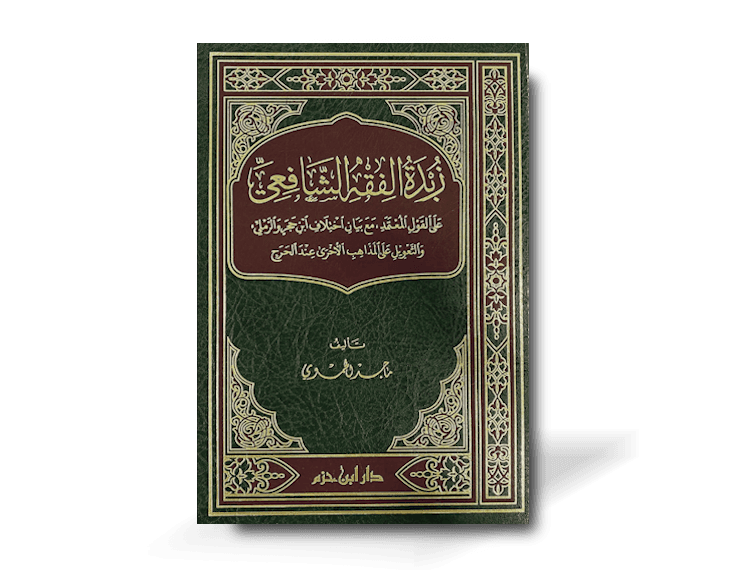
If your goal is general Islamic literacy — to understand the Shāfiʿī school well enough to be a knowledgeable, practicing Muslim — then al-Fiqh al-Manhajī (the modern structured manual) is sufficient. It is clear, organized, and accessible to any educated reader. It will serve you well.
If your goal is genuine mastery of the Shāfiʿī school — the kind that qualifies you to understand the great texts, teach, research, or eventually issue legal opinions — then there is no shortcut. There is a ladder, and every rung exists for a reason:
Safīnat al-Najāh — the entry-level primer; short, memorizable, essential
Matn Abī Shujāʿ (Ghāyat al-Taqrīb) — the foundational text of the school; the student who has mastered this has a working map of Shāfiʿī fiqh
Then, rung by rung, as each level is mastered — not merely read — the student ascends toward Minhāj al-Ṭālibīn and its great commentaries
The critical insight, repeated by scholars across centuries and still true today: no single book substitutes for another. The student who skips Safīna to read Tuḥfa is building on sand. The books are not interchangeable options — they are a sequence. The ladder is the method.
A Final Word on Editions
The books recommended here are not simply the most famous versions. They are the versions that serious students and teachers actually use — editions where the text has been verified against manuscripts, where marginalia and scholarly commentary have been carefully included, and where the production quality matches the importance of what is inside.
When you buy a classical text, you are entering a relationship with that book that may last decades. Edition quality is not a minor detail. It is the difference between a reliable scholarly instrument and a beautifully bound source of confusion.
At M4KTABA.com, every edition we carry reflects exactly this standard: the book a teacher would hand you, not just the book that looks impressive on a shelf.
-------------
🛒 Ready to browse or sell?
Visit M4KTABA.com and discover Arabic Islamic books you won’t find anywhere else.
في امان الله.